
Most business books promise better systems, stronger teams, and faster growth. Few manage to turn those ideas into something practical.
Traction: Get a Grip on Your Business by Gino Wickman stands out because it focuses on execution rather than motivation. Instead of offering abstract leadership advice, it introduces a framework designed to help companies become more organized, accountable, and predictable.
For entrepreneurs who feel like they spend every day putting out fires, this book offers a structured way forward.
What Is Traction Really About?
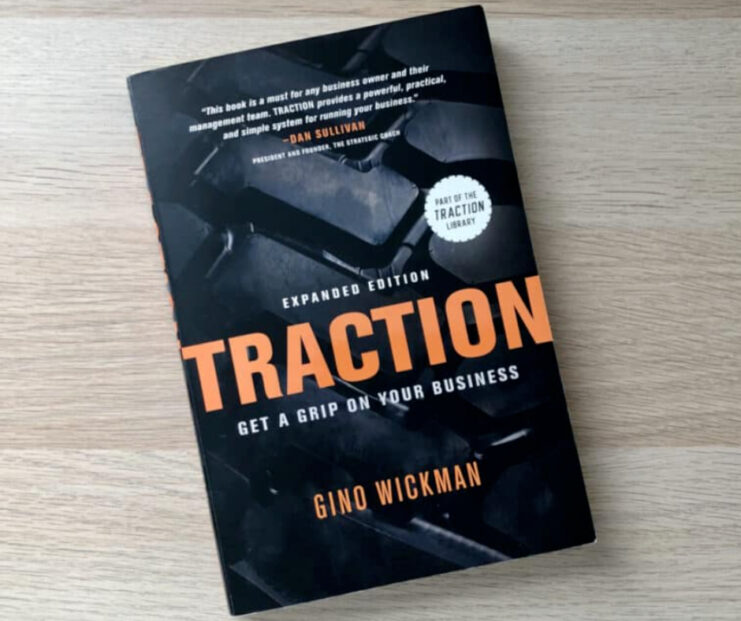
At its core, Traction introduces the Entrepreneurial Operating System (EOS), a management framework built around six essential business components: Vision, People, Data, Issues, Process, and Traction. Wickman argues that most companies struggle because these areas are weak or disconnected.
Rather than encouraging leaders to work harder, the book focuses on helping them build systems that make the organization work better.
Many readers will recognize the problems Wickman describes:
- Team members pulling in different directions
- Meetings that accomplish very little
- Growth that creates more chaos instead of more profit
- Constant firefighting instead of strategic planning
The strength of the book is that every problem is paired with a specific tool or process. It feels less like a traditional business book and more like an operating manual for a growing company.
Why The Book Feels Practical Instead Of Theoretical
One reason Traction remains popular among entrepreneurs is its emphasis on implementation. Wickman doesn’t spend pages discussing leadership philosophies. He shows readers exactly how to build accountability charts, create scorecards, run meetings, and establish quarterly priorities.
Businesses that already rely on structured systems will immediately recognize the value of this approach. For example, companies using specialized tools such as Gym Software often discover that technology alone does not solve operational problems.
Without clear processes and accountability, even the best software becomes underused. That is where the EOS framework becomes useful because it creates structure around the tools a business already has.
The book consistently returns to a simple idea: clarity creates momentum.
The Six Components That Drive EOS
Understanding the six components is essential because they form the foundation of the entire system.
| Component | Purpose |
| Vision | Align everyone around company goals |
| People | Put the right people in the right roles |
| Data | Use measurable numbers to guide decisions |
| Issues | Identify and solve problems quickly |
| Process | Document how work gets done |
| Traction | Ensure execution and accountability |
According to EOS Worldwide, these six areas represent the building blocks of a healthy business system. Companies strengthen each component to create alignment and consistent execution.
What makes this model appealing is its simplicity. Instead of introducing dozens of management concepts, the framework keeps leaders focused on a small number of priorities.
The Most Valuable Lessons In The Book
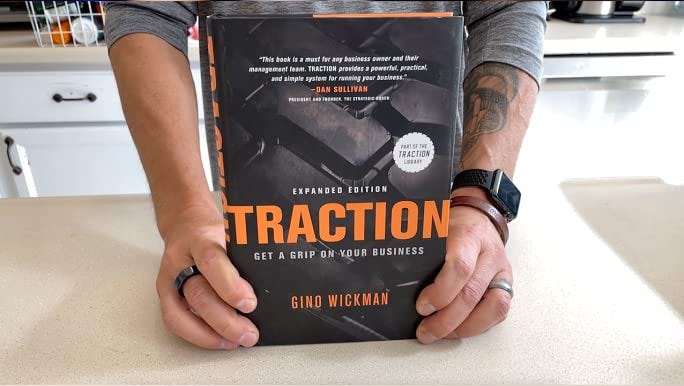
Many business books contain one memorable idea and hundreds of pages of filler. Traction offers several concepts that can immediately improve organizational performance.
A particularly useful lesson is the idea of “Rocks,” which are major priorities completed within a 90 day period. Rather than juggling dozens of initiatives, leadership teams focus on a handful of important objectives.
Another standout concept is running meetings with a consistent structure. Wickman suggests using weekly meetings that revolve around measurable data and issue solving rather than status updates.
Important takeaway: Problems grow when teams avoid discussing them directly. EOS encourages leaders to identify, discuss, and solve issues quickly rather than allowing them to linger.
These ideas may sound simple, but simplicity is often what growing organizations need most.
Where Traction Excels And Where It Falls Short
No business book is perfect, and Traction has limitations.
The biggest strength is its practicality. Readers can finish a chapter and immediately apply what they learned. The framework is also highly scalable, making it useful for companies that have outgrown informal management practices.
However, some readers may find the system rigid. Organizations that thrive on flexibility or highly creative workflows may resist the level of structure EOS introduces.
What works well
- Clear implementation steps
- Easy-to-understand framework
- Strong focus on accountability
- Practical meeting and planning systems
Potential drawbacks
- Can feel process-heavy
- Requires company-wide commitment
- Some tools take time to implement effectively
Businesses looking for quick fixes may struggle because EOS works best when leadership fully commits to the system.
Who Should Read This Book?

Traction is particularly valuable for business owners, leadership teams, and managers responsible for scaling an organization.
It tends to resonate most with companies experiencing rapid growth. At that stage, informal communication and ad hoc decision making often stop working. The systems that helped a startup reach ten employees rarely work when the company reaches fifty or one hundred.
An interesting observation from EOS resources is that many entrepreneurial companies encounter similar frustrations regardless of industry, including lack of control, people challenges, profit concerns, growth ceilings, and ineffective strategies. EOS was specifically designed to address those recurring problems.
Readers looking for inspiration alone may prefer another book. Readers looking for operational structure will likely find substantial value here.
Final Thoughts
Traction succeeds because it transforms business management into something concrete and repeatable. Instead of relying on motivation, it emphasizes systems, accountability, and clarity.
The Entrepreneurial Operating System gives leaders a practical framework for organizing teams, measuring progress, and maintaining focus as the business grows.
For entrepreneurs frustrated by constant chaos, unclear priorities, or inconsistent execution, this book remains one of the most actionable business guides available. It does require commitment, but for organizations willing to follow the process, the payoff can be a more organized and predictable business.
FAQ
Is Traction suitable for small businesses?
Yes. The framework is often used by small and mid sized companies that need more structure as they grow. Many of the tools can be implemented even by teams with fewer than twenty employees.
Do you need to hire an EOS consultant to use the book?
No. The book provides enough detail to begin implementing EOS independently. Some organizations later choose professional guidance, but it is not required.
How long does it take to implement the EOS framework?
Implementation varies widely. Some tools can be adopted within weeks, while full organizational adoption often takes many months or longer.
Is Traction only for entrepreneurs?
Not at all. Managers, department leaders, and executives can benefit from the operational principles even if they are not business owners.
What book should I read after Traction?
Many readers continue with other EOS-related books such as Get A Grip or Rocket Fuel, which expand on specific EOS concepts and implementation strategies.